
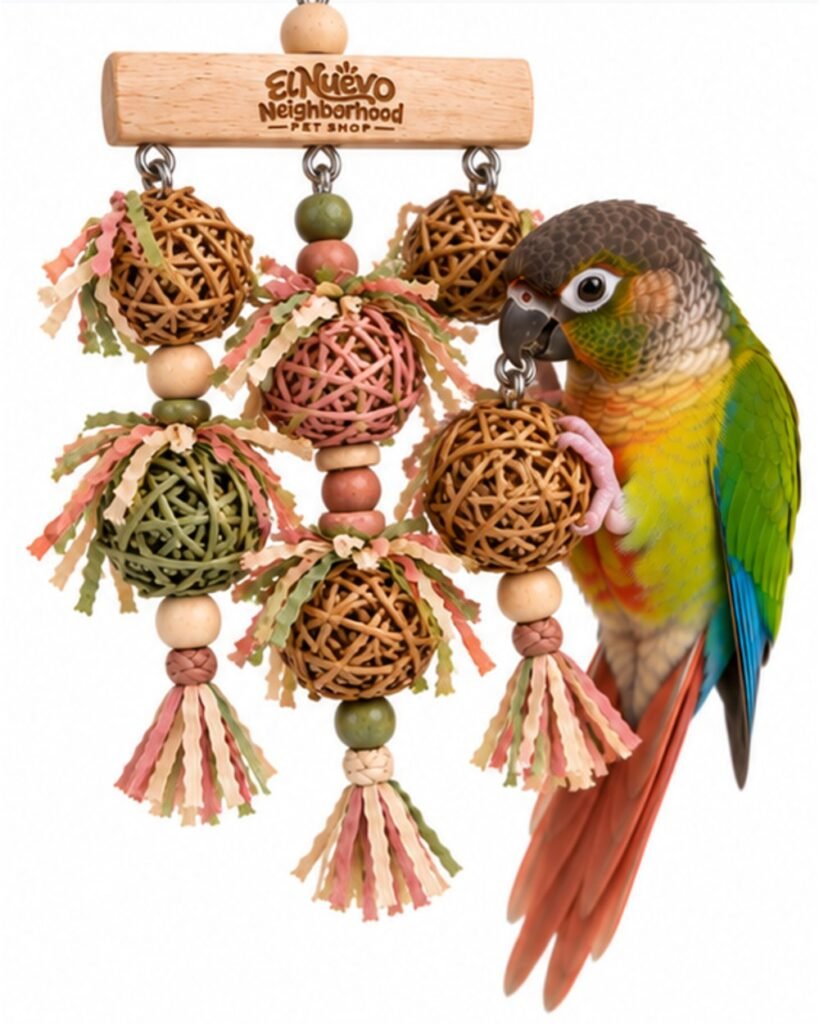
A new toy can hold a bird’s attention for days, and then one morning it gets ignored. Birds are curious, and the same toys in the same places can lose their appeal. Rotating toys is a simple habit that keeps the cage interesting for small and medium birds such as budgies, parrotlets, lovebirds, cockatiels and conures. Here is how often to do it and how to set up a routine that is easy to keep.
Why rotate toys at all?
- It renews interest. A toy that has been out of sight for a while can feel new again.
- It encourages different kinds of play. Swapping a chew toy for a shredding or foraging toy gives your bird something different to do.
- It helps birds accept change. Birds that see regular, gentle changes often become more comfortable with new objects.
- It builds in inspection time. Each time you take a toy out, you can check it, clean it and decide whether it needs replacing.
How often should you rotate?
For most small and medium birds, swapping some toys every week or two works well. You do not need to change everything at once. Replacing one or two toys at a time keeps things interesting without upsetting your bird.
Some birds enjoy more frequent changes, while cautious birds may prefer a slower pace. Budgies and cockatiels can be wary of new objects, while many conures and lovebirds investigate new things quickly. Watch your own bird and adjust.
Keep a favorite or two in place
Most birds have a toy they return to again and again. Leave one or two familiar favorites in the cage during each rotation. A familiar toy gives your bird a sense of security while it gets used to the new ones.
A simple rotation system
- Build a small collection. Have more toys than fit in the cage at one time, so some are always in storage.
- Group by type. Keep a mix of chew toys, shredding toys, foraging toys and interactive toys.
- Pick a regular day. Choose the same day each week or every other week, so the routine is easy to remember.
- Swap one or two toys. Remove a toy or two, inspect and clean them, and put different toys in their place.
- Store toys clean and dry. Keep stored toys in a dry container, away from dust and moisture, especially those made of paper, palm, loofah, vine or balsa.
Change placement, too
Moving a toy to a different spot can make it feel new. Try hanging a toy on the other side of the cage, closer to a different perch, or at a different height. Make sure the new spot does not block food, water or your bird’s path between perches.
Introducing new toys during rotation
When a rotation includes a toy your bird has never seen, take it slowly. Place it near a favorite perch, or outside the cage for a day so your bird can look at it first. Supervise the first few play sessions, and give a cautious bird a few days to approach it.
When rotation becomes replacement
Rotation is also a good time to decide whether a toy should be retired. Replace a toy when most of its chewable or shreddable material is gone, when fibers are badly frayed, when acrylic is cracked or when hardware is bent or loose. Shredding and foraging toys are meant to be taken apart, so they will need replacing more often than others. Our Bird Toy Safety & Care guide explains what to look for.
Watch your bird for clues
Your bird will show you what is working. Signs that it is time for a change include ignoring the toys in the cage, or spending less time playing than usual. If your bird seems unsettled after a rotation, put a familiar toy back and make smaller changes next time. If your bird’s behavior changes in a way that worries you, talk to an avian veterinarian.
Keep it simple and consistent
Toy rotation does not need to be complicated. A small collection, a regular day and a quick check of each toy is enough to keep your bird’s space interesting and its toys in good condition. You can browse toys for small and medium birds in our shop.