
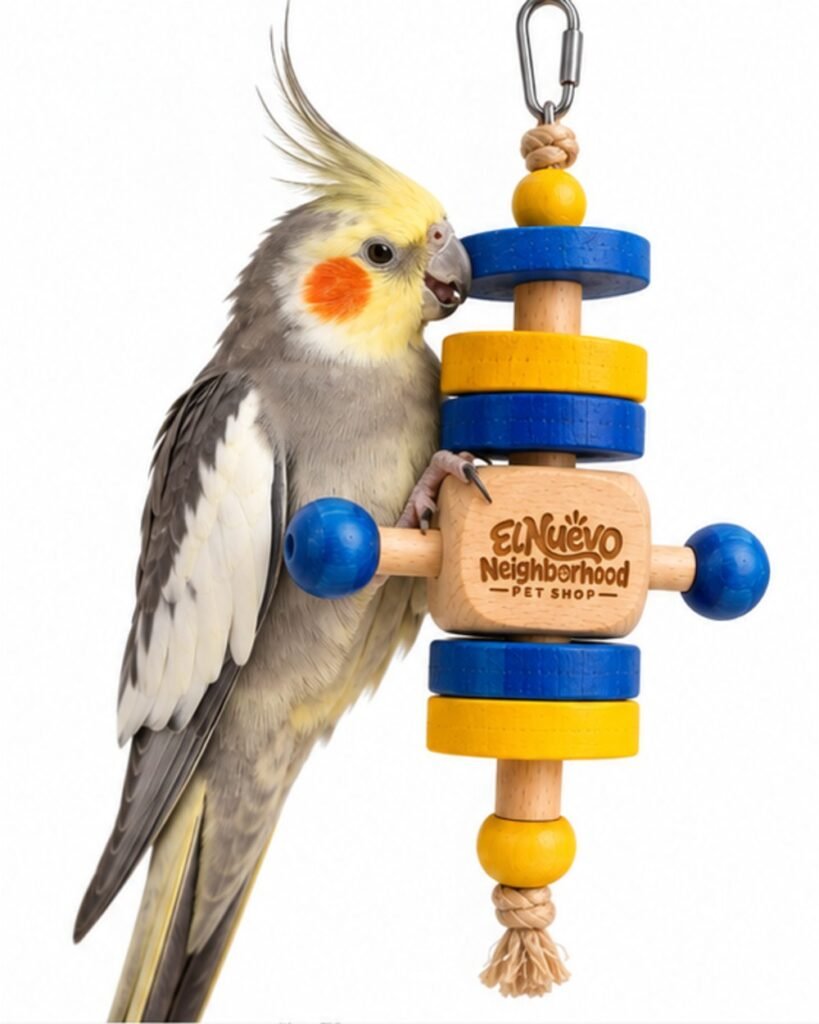
Bird toys come in many shapes and sizes, and a toy that suits one bird can be a poor fit for another. Choosing the right size is one of the simplest ways to make playtime safer and more enjoyable. This guide is written for owners of small and medium pet birds, such as budgies, parrotlets, lovebirds, cockatiels and conures.
Why toy size matters
A toy that is too large can be intimidating. A small bird may avoid it, or may not be able to grip, move or chew the parts. A toy that is too small for a stronger beak can be broken apart quickly, and the pieces may be small enough to swallow. Rings, chain links and gaps between parts also need to be sized so that a bird’s head, toes or beak cannot get stuck.
The goal is a toy your bird can handle comfortably and work at for a while, without being able to break it into risky pieces right away.
Small birds: budgies and parrotlets
Budgies (budgerigars) and parrotlets are light, quick and curious. They usually do well with:
- Lightweight parts they can push, swing and carry, such as small beads, paper strips and thin pieces of soft wood
- Thin, soft materials that are easy to shred, such as paper, palm leaf and balsa
- Small bells and rings sized for small beaks and feet
Parrotlets are small, but many have a stronger bite than their size suggests. Watch how quickly a parrotlet works through a toy, and choose sturdier wood pieces if softer toys disappear too fast.
Small to medium birds: lovebirds and cockatiels
Lovebirds are energetic chewers and often enjoy shredding paper, palm and other natural fibers. Cockatiels tend to be gentler chewers and many enjoy toys they can preen, ring or move around. For both, look for:
- Slightly larger wood pieces than you would use for a budgie
- Shreddable layers that take some effort to pull apart
- Hanging toys with enough length to reach from a perch, without crowding the cage
Medium birds: conures
Conures are active, playful and often hard on their toys. Most do well with thicker hardwood pieces, sturdy stainless steel hardware and toys that combine chewing with something to shred or search through. If your conure destroys a toy within minutes, it may need a toy with harder or thicker parts. If it ignores a toy completely, the toy may be too large or unfamiliar, and it may need a gentler introduction.
Five things to check before you buy
- Materials. Read which materials a toy is made of, and think about how your bird chews. Soft woods and paper wear quickly, while hardwood lasts longer.
- Openings and gaps. Make sure rings, links and spaces between parts cannot trap a head, toe or beak.
- Small parts. Beads and bells should be secured so your bird cannot pull them loose easily.
- Hardware. Look for sturdy hanging hardware, such as stainless steel chains and clips.
- Cage space. Make sure the toy leaves room for your bird to move, turn around and spread its wings, and that it does not block perches, food or water.
What if my bird is between sizes?
Many birds fall between groups. A strong-beaked lovebird may treat toys like a small conure would, and a gentle conure may prefer the toys a cockatiel enjoys. When in doubt, start with the toy that matches your bird’s chewing strength rather than its body size, and watch how it is used during the first few sessions.
Consider how your bird likes to play
Size is only part of the picture. Some birds love to chew wood, some prefer to shred paper and fibers, some enjoy searching for hidden treats, and some like toys they can ring, spin or carry. Offering one toy from each type helps you learn what your bird enjoys most. You can browse our chew toys, shredding toys, foraging toys and interactive toys to see the options.
Keep checking as toys wear
A toy that was the right size when new can change as it is chewed. Wood can wear down to thin splinters, fibers can fray into long threads and parts can loosen. Check toys every week, trim loose threads and replace any toy that has worn down or has loose parts.
Finding the right fit
The right toy is one your bird can handle comfortably, enjoys using and cannot quickly turn into small, risky pieces. Watch your bird with each new toy, adjust as you learn its habits and replace toys as they wear. For more on inspecting and cleaning toys, read our Bird Toy Safety & Care guide, or visit our shop to see our current toys for small and medium birds.